
Nottingham's Shakespeare Street is lined with hundreds of people dressed in long skirts, corsets and Victorian-esque clothing. Some wear hoodies with red embroidered writing that says From The Pyre. We know we're in the right place: The Level, where the incredible The Last Dinner Party are performing their latest album, released only a few days before...

After performing at some of the biggest festivals, including the All Things Go in New York City and British Summer Time in London, The Last Dinner Party return to a more intimate setting, creating a proverbial song by the fireside. Despite being infused with pain, torment and frustration, these songs rise above; they float, rendering all the foes fictitious. This second album invites us to dance amongst the embers from their songs, which burn with personhood, pain and power. The Last Dinner Party is The Pyre, and we are all dancing around them.

As an opener for the night, Agnus Dei sets the tone for From the Pyre as an homage to heartbreak, to taking pain and asking for better. Through deep piano chords and razor-sharp guitar riffs, Abigail Morris’ voice appears like a candle flickering at an altar, angelic, powerful, mesmerising. The choral melody creates imagery depicting a catastrophe, how heartbreak can become a personal apocalypse, as the world the narrator once knew comes to an end, and the very creator is complicit in its collapse. This song is breathtaking both musically and in its lyrics, stringing both devotion and destruction in each sentence. With the band's catholic upbringing, biblical imagery permeates; this song feels like scripture rewritten, a prayer whispered into a barred fist at an altar, the death of what once was, while ushering in the whisper of what is coming.

Leaving little time to digest, the band go straight into the second song Count the Ways.Sometimes it is easier to feel love when it is no longer, the feeling of it which once fluttered, fleeting like the sunrise, now sticks out of your chest like a knife, left there by the very hand you once held. Count the Ways beautifully captures the ache, the longing of the loss left behind in the blaze of betrayal. It is the torment of reliving your relationships only in your mind, trying to keep the love alive by watching rose-tinted photo frames of it flicker in your phone light.
When your future finds a full stop, your bed takes the form of your deathbed, the darkness is your only aid - the only thing to hide the offensive sun which shines too bright - you dare not look, so you bury yourself deeper in what once was...
The song mentions bells and the duality this image creates makes us wonder: were they once wedding bells, now turned to funeral bells? We are at The Pyre after all, where love and loss burn in the same flame.
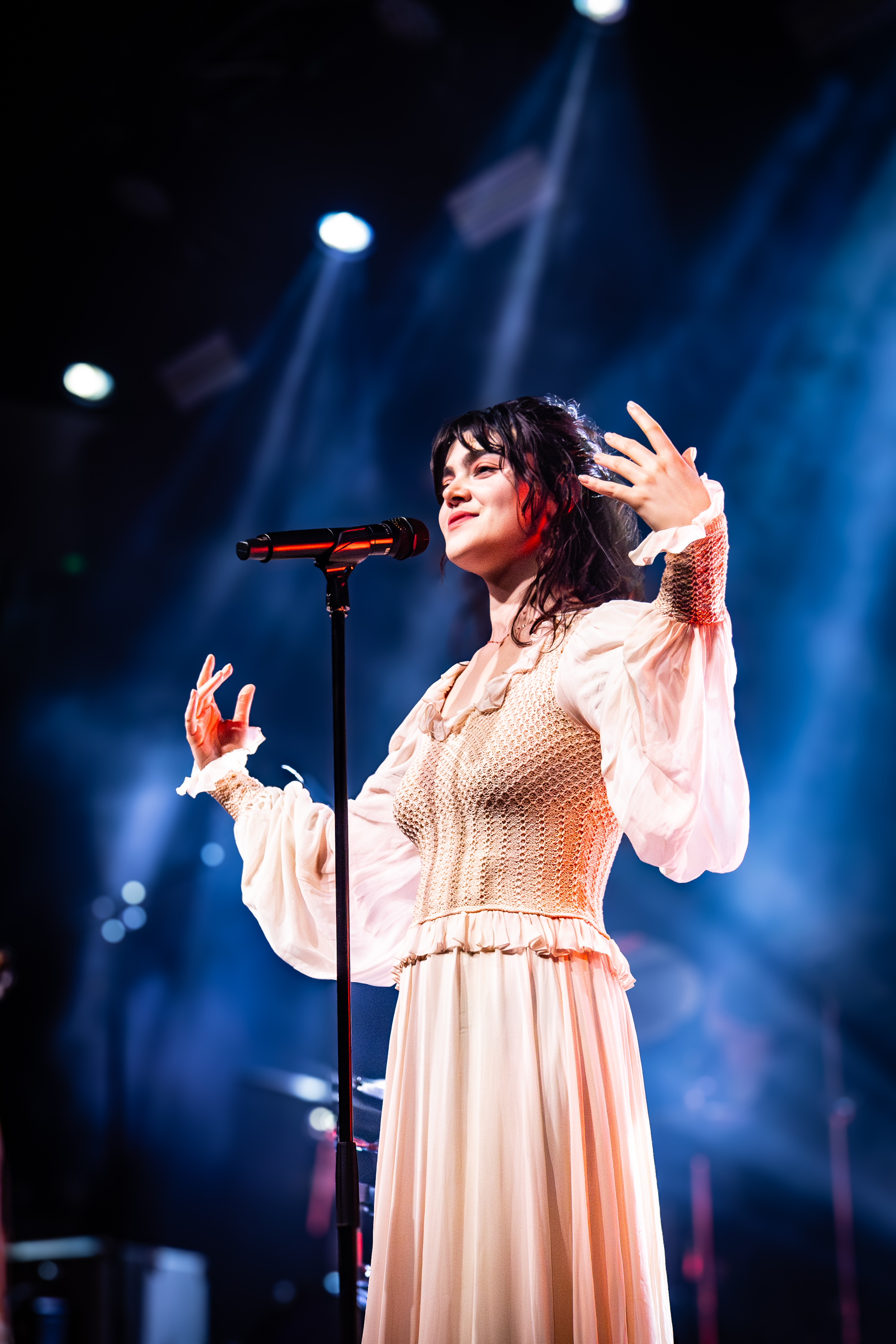
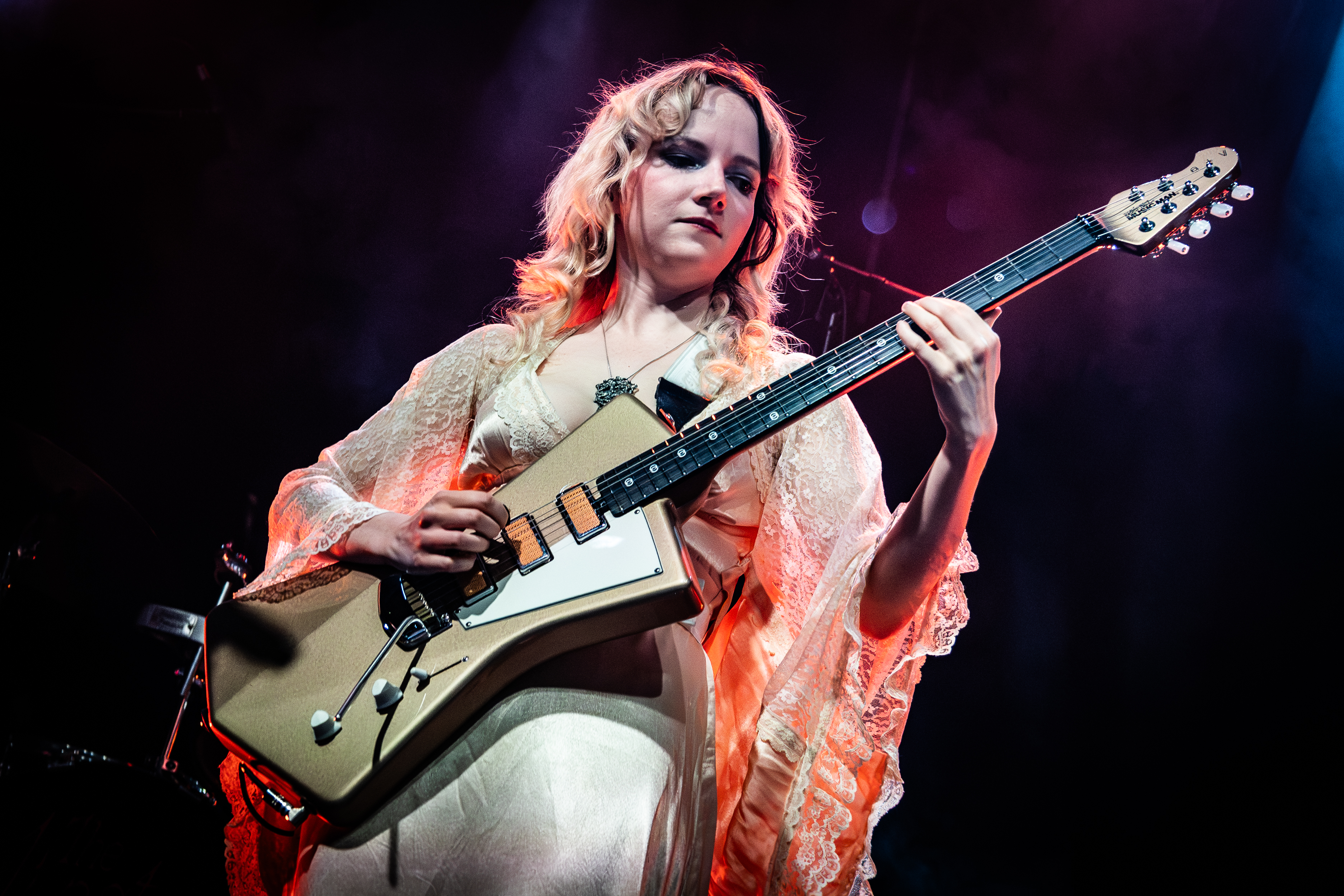
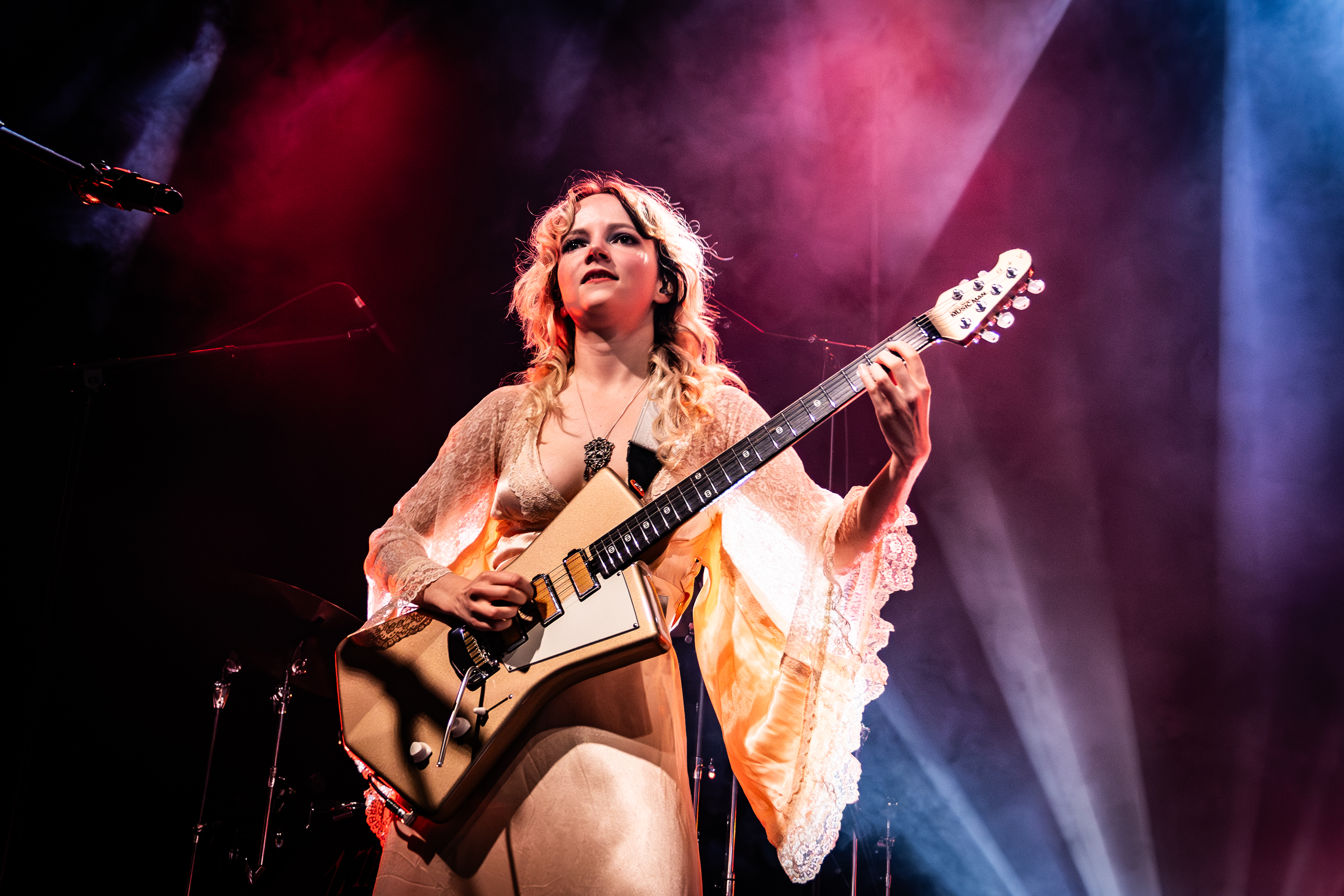
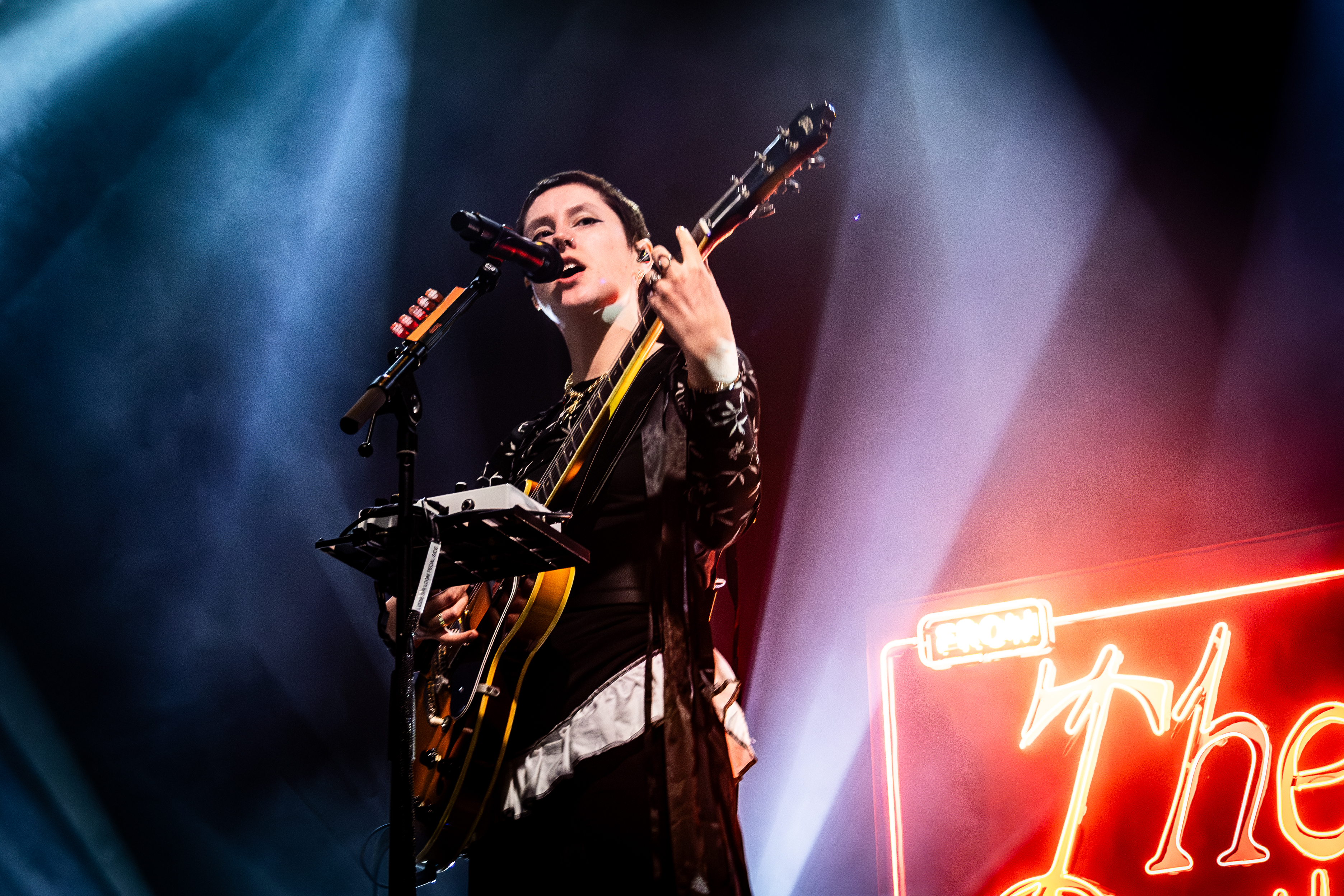
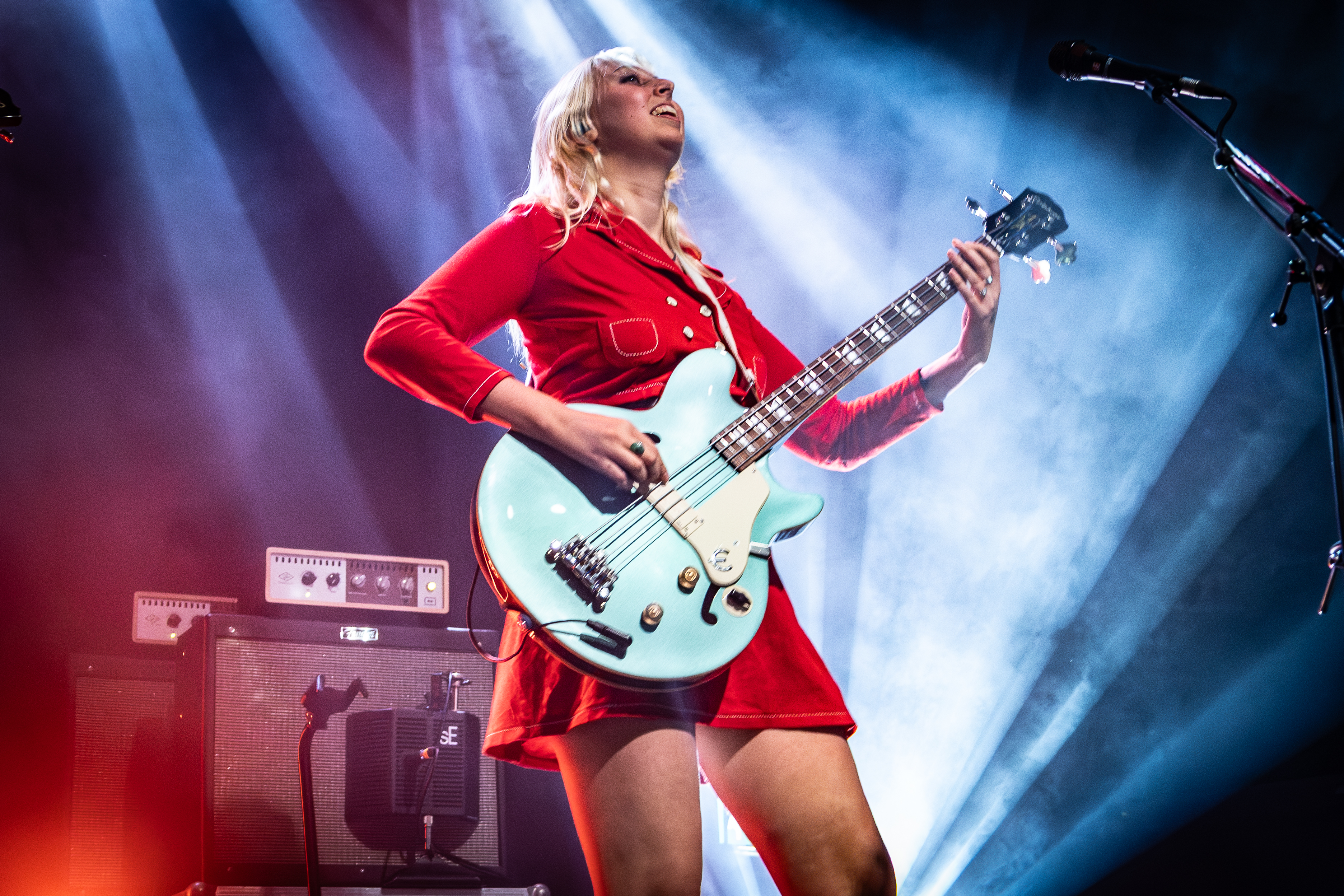
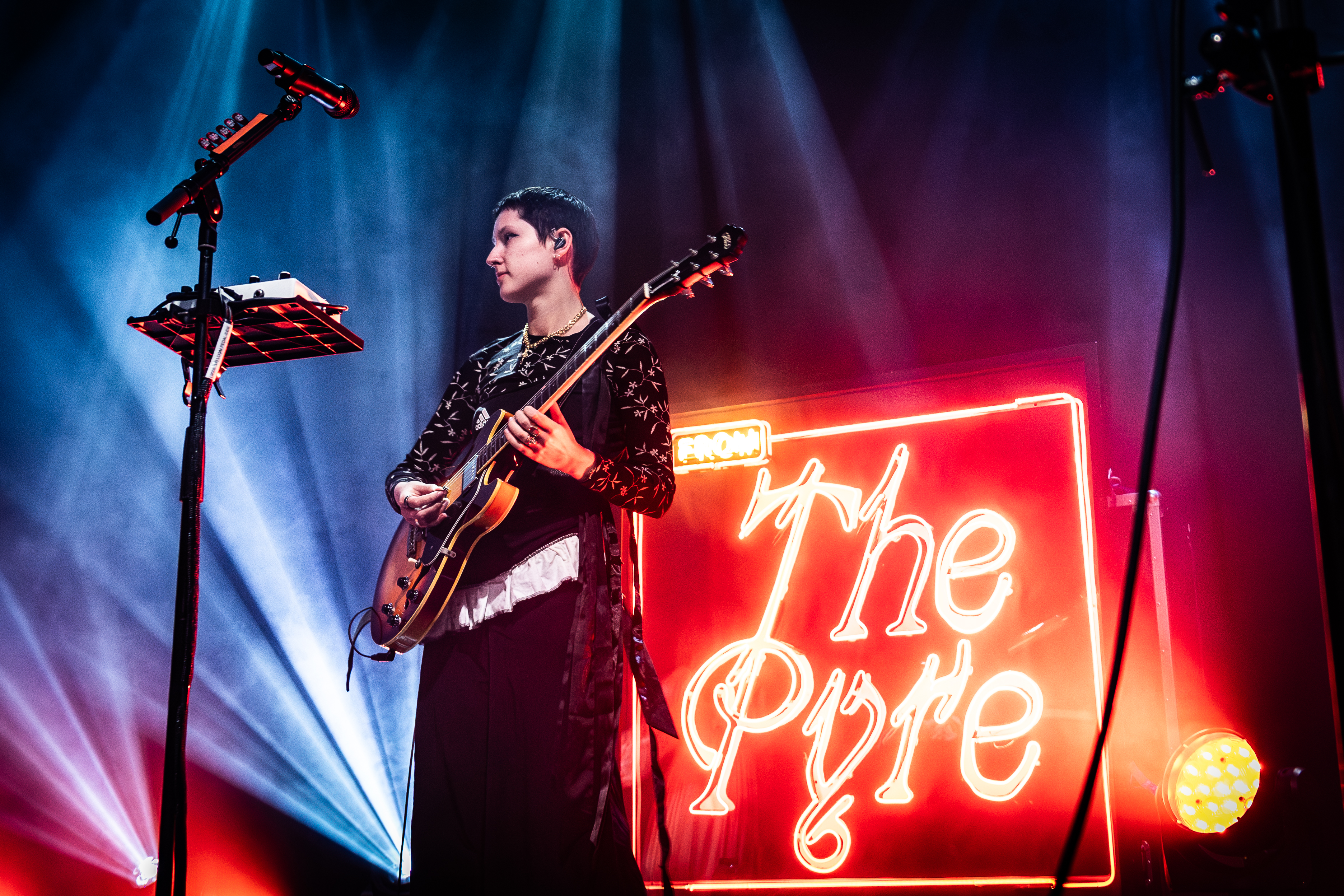
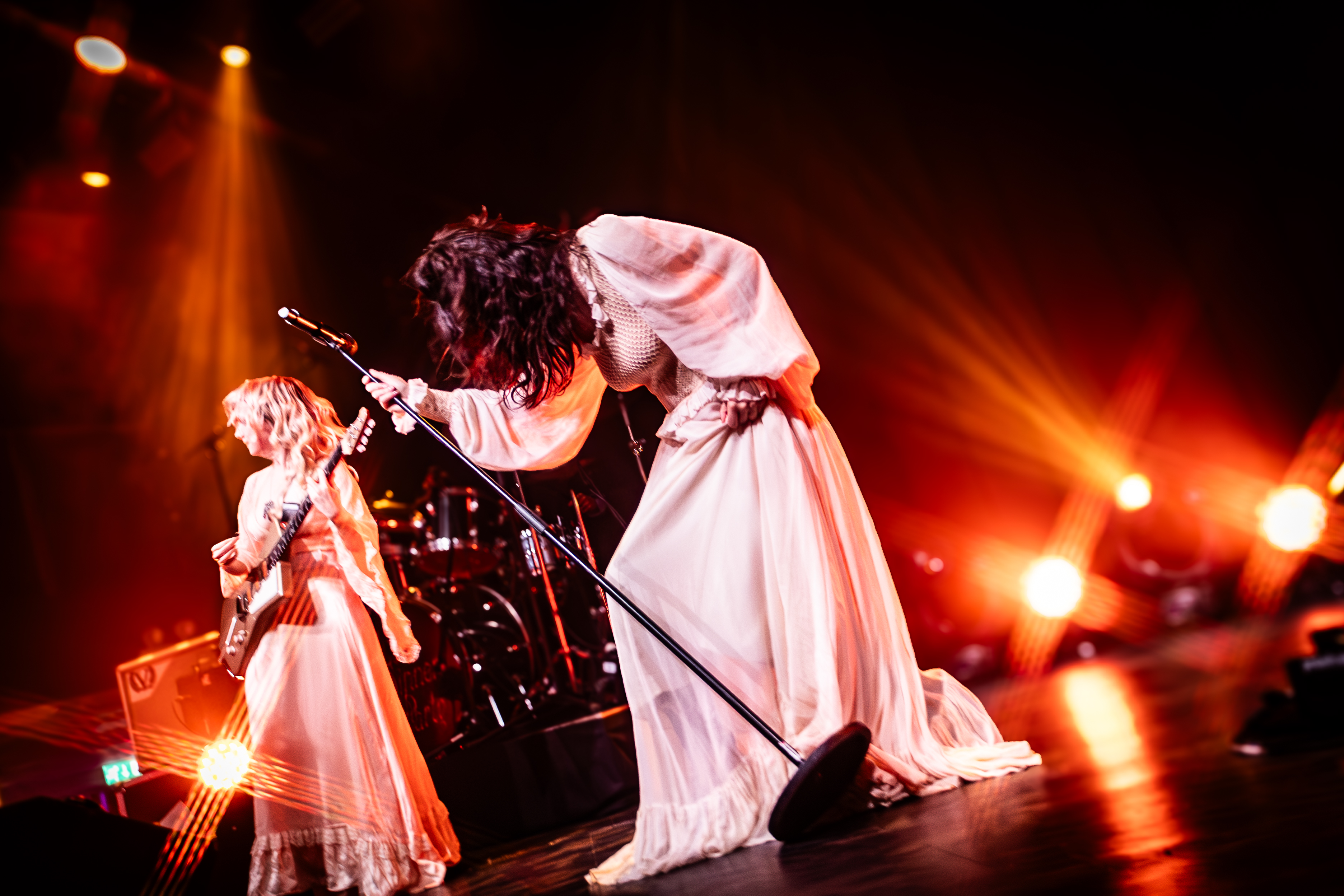
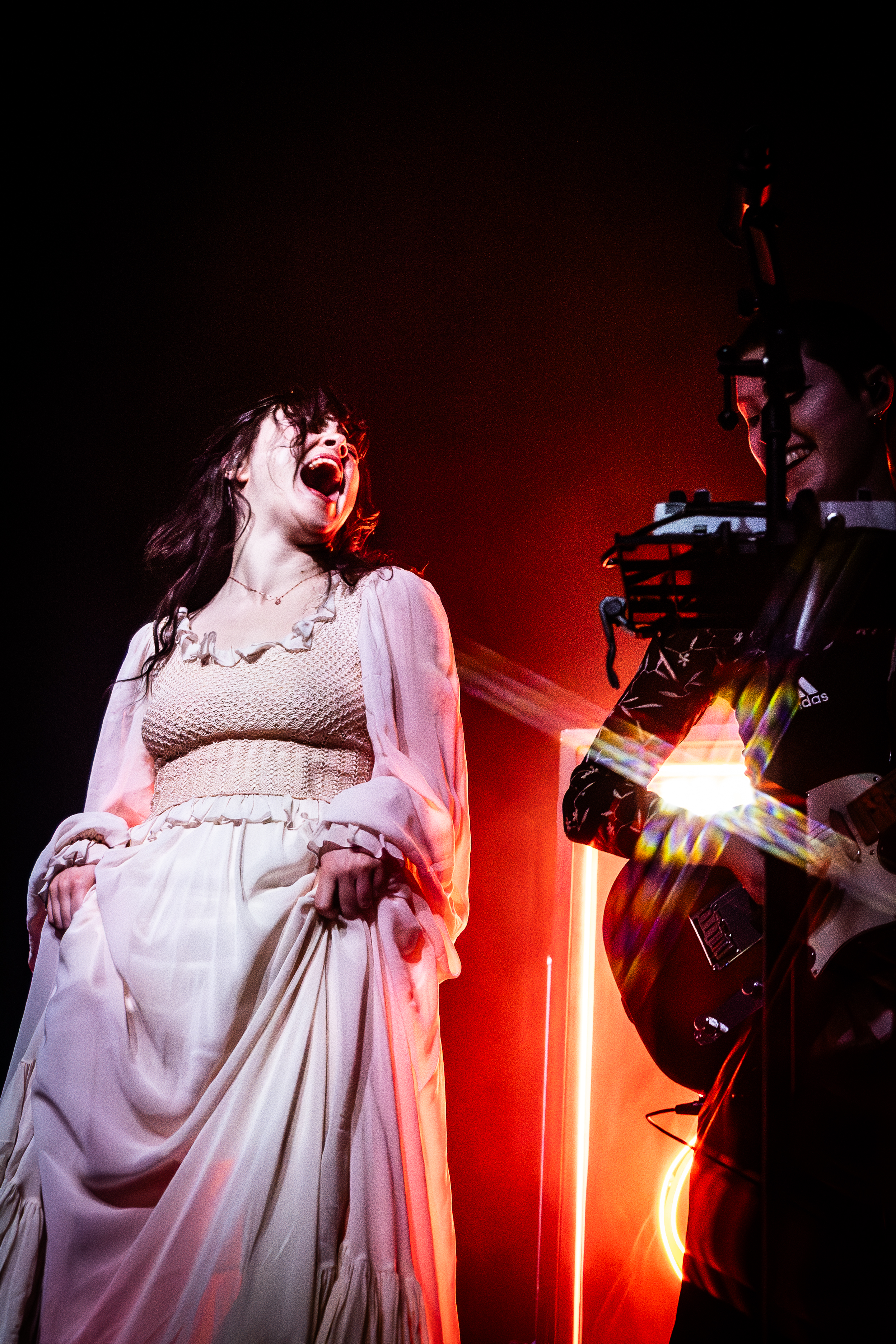
On stage, the quintet embody the very flames they sing of, their dresses flickering in shades of red, black and white, with Morris’ long, billowing gown curling over the stage as though rising from the blaze. It’s a striking image of unity, a visual reflection of their sound. The Last Dinner Party, made up of Abigail Morris (vocals), Emily Roberts (lead guitar, mandolin and flute), Lizzie Mayland (vocals, guitar), Georgia Davies (bass) and Aurora Nishevci (keyboard and vocals), perform not as five individuals but as a single force, each member leaving their mark, each song carrying the shared brilliance of all their minds intertwined.
As a huge fan of their debut album Prelude to Ecstasy with standout singles such as Nothing Matters and Lady of Mercy, I must confess I was apprehensive about the approach to this album release; would it be received the same? How could an album such as that be topped? But as the night went on, I was once again entranced by the mesmerising harmonies, haunting lyrics and transportative instruments of this bewitching band.
Second Best’, written by Roberts, is easily one of the night's standout tracks. At first, an angelic choral piece with layered harmonies and synth-infused melodies, the sound of a lover trying to convince their partner that being "second best" should be enough. This quiet, insidious agony that comes from being made to believe you are disposable, that you should be grateful to be on the podium at all, even if it's not first, after all the waiting and all the work, that to be recognised at all should be enough. However, the rock infused chorus stabs back, sharper than a sword, its sardonic tone readdressing the power imbalance. The rhythm captures the tug of war between what is and what you believe it to be. You know it is time to go, this is not good enough, this treatment is not what you deserve, yet it could be so good, so nice... And sometimes it is, but you let go of the rope; it's time to walk away as they fall back and you refuse to be second best any longer.


This is just one of the songs on the album that, although anyone can enjoy for a range of reasons, really feels like a walk-through of womanhood. This belief feels especially apparent in the songs such as I Hold Your Anger and Woman Is a Tree. Similar in message to Billie Eilish’s What Was I Made For?, I Hold Your Anger is not merely a song but a question capturing the weight of responsibility: being a mother makes you an emperor, you raise your child to be indomitable, in your arms the world is theirs but one day the levee (the mother) must let go of the hold, relinquish responsibility, and pass on the baton.
In a world where a child could metaphorically cut off their arm and society would blame the mother ("I dreamt that you cut off your arm and I blame myself"), perfection is both demanded and perpetually out of reach. I Hold Your Anger seems to encapsulate the fork in the road of modern motherhood, whether to try for children or to step away from a predestined path. This path is cursed, and if you stumble, even for a moment, then you have slipped, you have fallen, you are now in the land of shame, and a part of you will remain there forever.
At its heart, I Hold Your Anger heralds the internal division many women face. Despite the theatrical rock delivery, a staple of The Last Dinner Party’s sound, they refrain from romanticising this torment. This is an anthem daring us to ask: What if we defy our supposed design, what if we see the label of what could be for the cage that it is and break free, forming a new path in the road, a trident of choice without shame either way? It is in this question that the song is no longer about rage but about release.
Woman is a Tree is hammered full of harmonies that serve to haunt and enchant, like a siren song; we are enveloped in this surreal foreboding of dread, but can't help but listen deeper. Perhaps its power encapsulates what it is to be a woman, to be rooted, to bring life, to be admired, and resilient against external forces. Human fragility reimagined as the strength of an oak tree; immovable, yet it expands, adapting to the seasons that demand its change but remaining in form, devoted to the land that structures it. This song continues flipping stereotypical narratives, the man as a tree and a woman as a simple, elegant vine. A tree can be both stoic and elegant, swayed by the breeze yet stable where it stands, secure in its structure. Infused with folktales and parables, this song is haunting, simmering in your head through its layered harmonies, a beast of sisterhood, generational pain and resilience.
Rifles, sung by Nishevci, is a powerful anti-war rally. At first, the song is slow, a voice fading through the mist of no man’s land, the build up, the rush of bloodied boots, anger, adrenaline, propulsive, a build up where Morris sings "Red" until it falls back gently, a nod to the futility of war - what’s it all for? All the buildup for loss. Just as you begin to believe this song couldn't become any more powerful, both musically and in sentiment, Morris and Mayland sing the penultimate verse in harmonised French to each other, a choral display perhaps to symbolise a funeral lament, the mourning, the sacrifice, the audience transfixed. The beat picks up again as the whole band harmonises their screams, capturing the fear, the outrage. The haunting harmonies continue lingering like the final strum of a guitar; war wages on.
Sail Away sounds like it was shot on an old film camera, capturing a couple as the years go by. Young, they stroll the promenade, skipping stones on the shoreline and smiling as ice cream dribbles down goose-bumped elbows, but something unspoken drives the two apart, leaving them both trying to "sail away" from the story, trying to forget the glory so they can focus on why it went wrong and they don’t fall back - so they can eventually move forward. But the final verse’s repetition of "Take you with me anywhere" proves this fragment of what once was will travel with them forever, like the sand you still find in your beach bags years on, they linger, living on somewhere in your shared pasts.
Perhaps the unspoken thing is discussed in The Scythe. This ballad is heart-wrenching, comparing love and loss to life always in a different room to you, one you wish to enter, but if you ever do, you’ll realise it is empty and all that is left of your loved one lives on in you. Grief is not an end to love; the love we have lost is just in the next room. Inspired by both a break-up and the death of Morris’ father when she was just a teenager, this song is poignant, rendering the audience silent, eyes full of tears, mind full of memories, this human heartache a shared song that we all know how to sing to. As the song hits its final note, a tearful Morris sits at the front of the stage, addressing the audience as one.

“When I was 15, I would sit in my bathroom and just feel so sad, and cry so much, feel it all being impossible and painful. All I wanted to do was write music, so I sat at the piano and wrote it all down, and it helped, and now, I get to do this, and I get to see you all; it makes everything so worthwhile... We have seen so many messages about experiences of grief or personal pain, and I really hope that you feel like you can take that grief, that pain and put it somewhere good... Okay, happy song now, everybody dance please!"
And dance we do, as the penultimate track of the night, Inferno, plays out. It is high energy and inspired by the duality of fame, the power it may provide and the fragility that comes with it. Put on a stage you have been pleading, praying, and practising for your whole life, only to find it becomes a pedestal. Passion is exchanged for prods, pokes, and magnified eyes over your movement, all asking, "What's next? Who is that you’re with?" You keep trying, you keep sweating, breathing, giving yourself to each sentence, because the skeleton of the song belongs to the band members, but it is the people that put you on those stages, that set up the "what now’s" that you must pray to. You believe them because they free you from your melancholia, your locked-up house and mind collecting dust like an antique that once had so much potential now thrown to the back of the attic amongst other knick-knacks. They saved you from that legacy, and now you have to metaphorically burn to show them how good you are, good enough to be good enough.
The show finishes with a single This is the Killer Speaking, an eccentric, cowboy-disco-type jive that offers further opportunity for crowd interaction with someone in the crowd passing Morris a cowboy hat, which she dons, becoming the cowboy killer. This song is The Last Dinner Party's signature baroque-pop meets country, with a twangy, slide guitar, a catchy chorus and flourishing synths. It's the perfect track to end on, full of energy and a bouncy beat. It sets the tone for your Friday night, it says, despite all this pain, all this heartache, all the decisions we are bound to, even if they aren’t ours, there is always room to dance, and through the flames of the pyre we are reborn as something magnificent.
The ritual of fire dances has been practised throughout history as a symbol of courage, celebration, and spiritual chants that manifest wishes, particularly for women. It is both personal to the group but also belongs to each member of the audience, who, as they sing along, cast their own stories into the flames and warm their hands as it burns to the melody of each song lyric.
The Last Dinner Party performed at The Level on 17th October 2025.


We have a favour to ask
LeftLion is Nottingham’s meeting point for information about what’s going on in our city, from the established organisations to the grassroots. We want to keep what we do free to all to access, but increasingly we are relying on revenue from our readers to continue. Can you spare a few quid each month to support us?


