
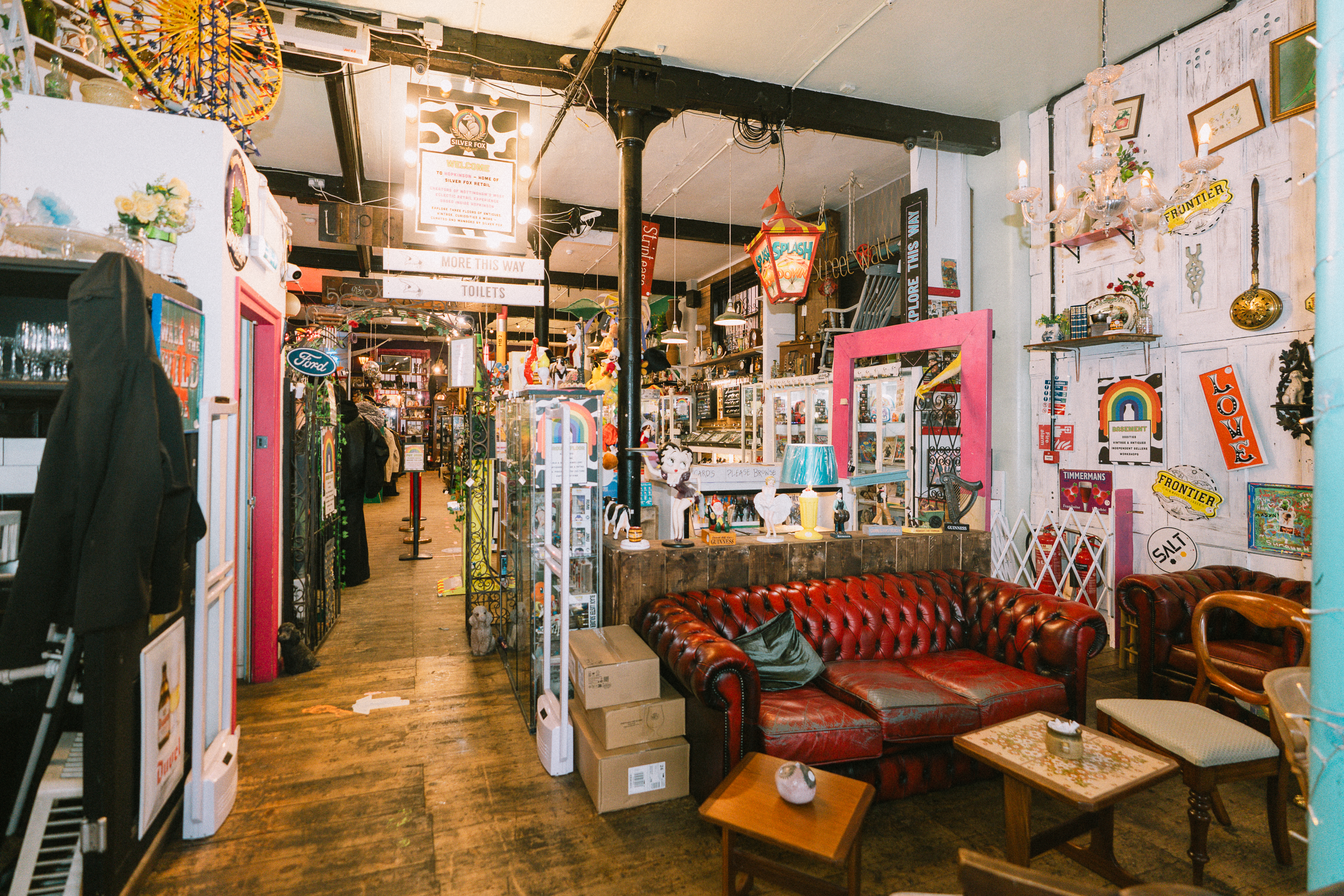
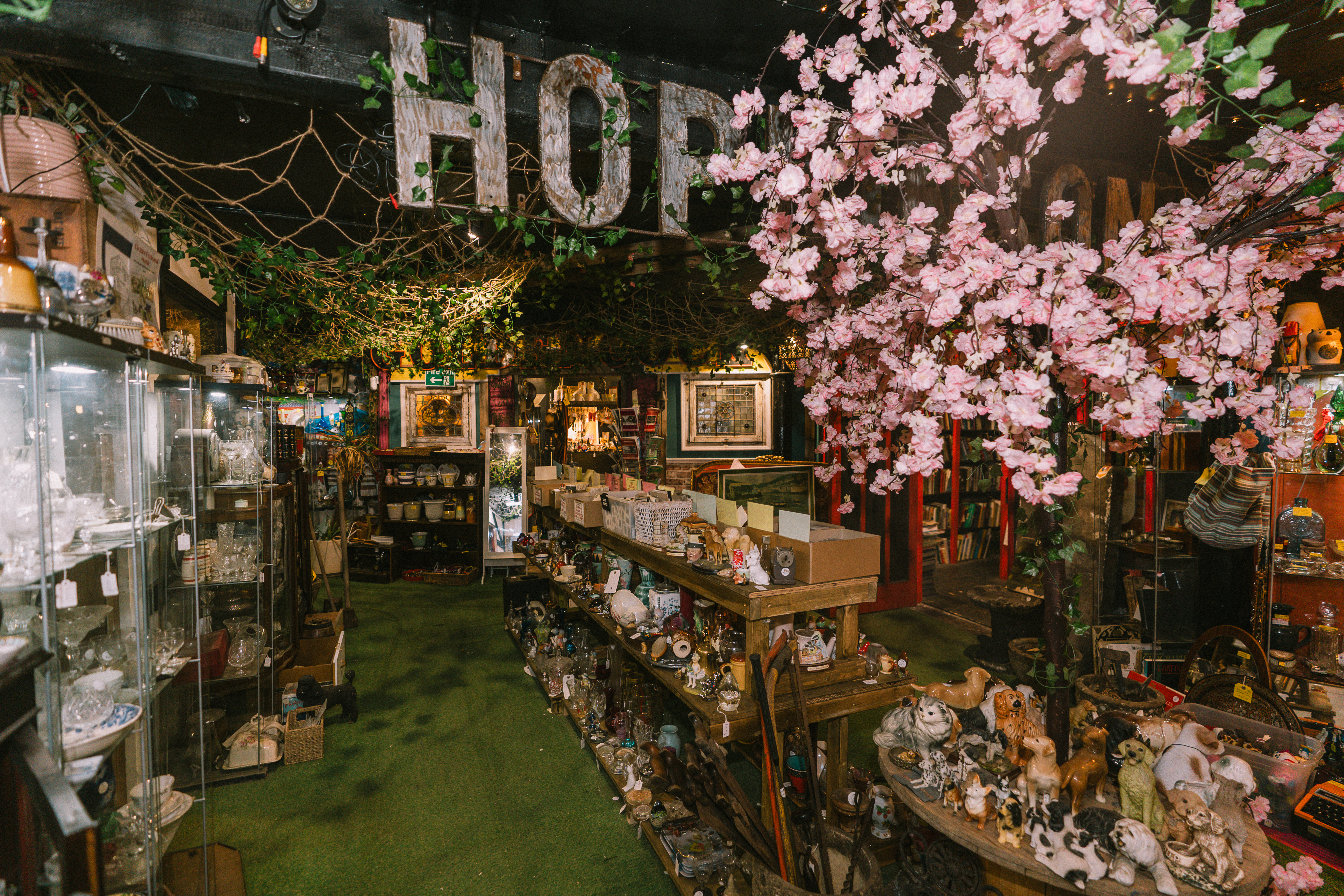
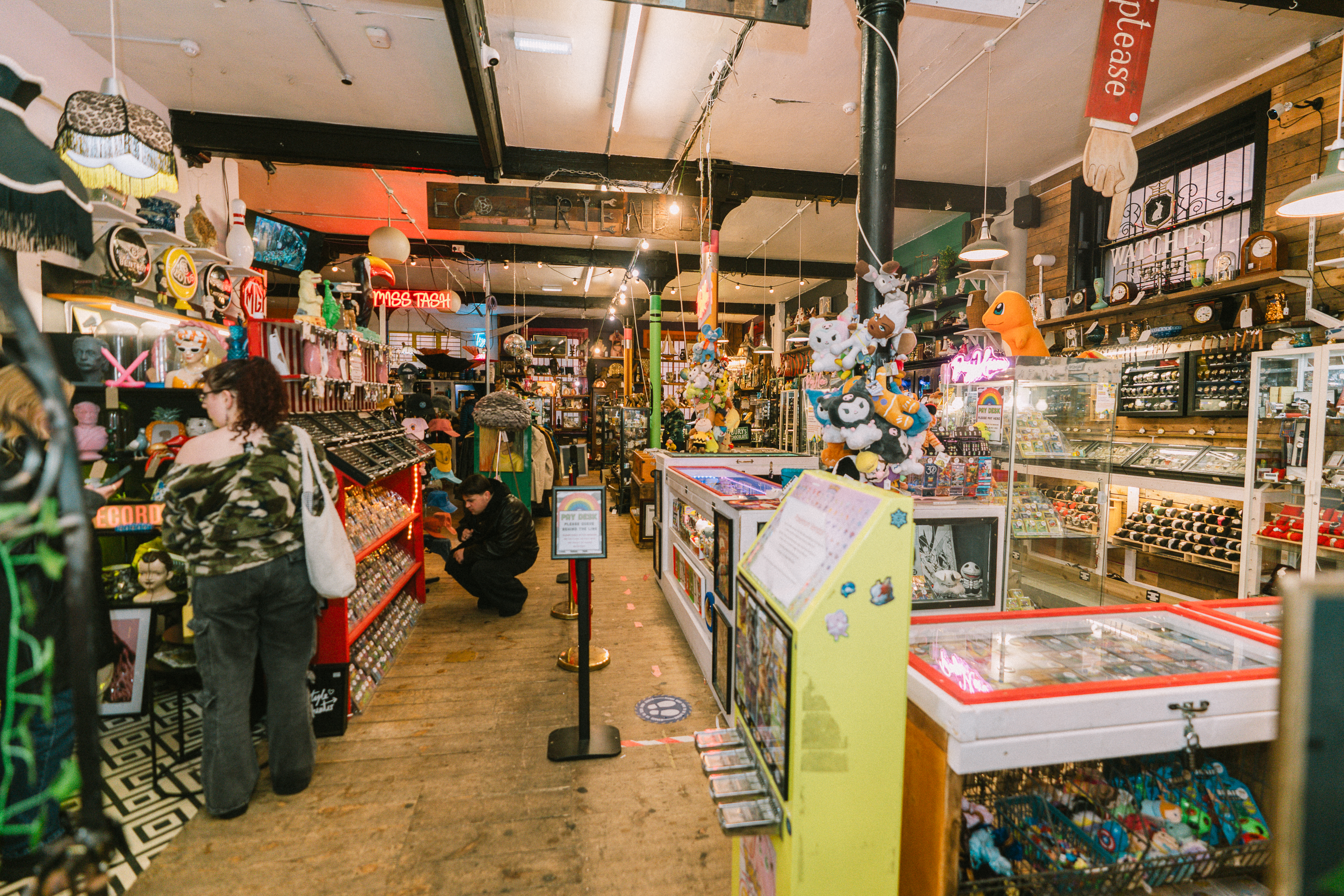
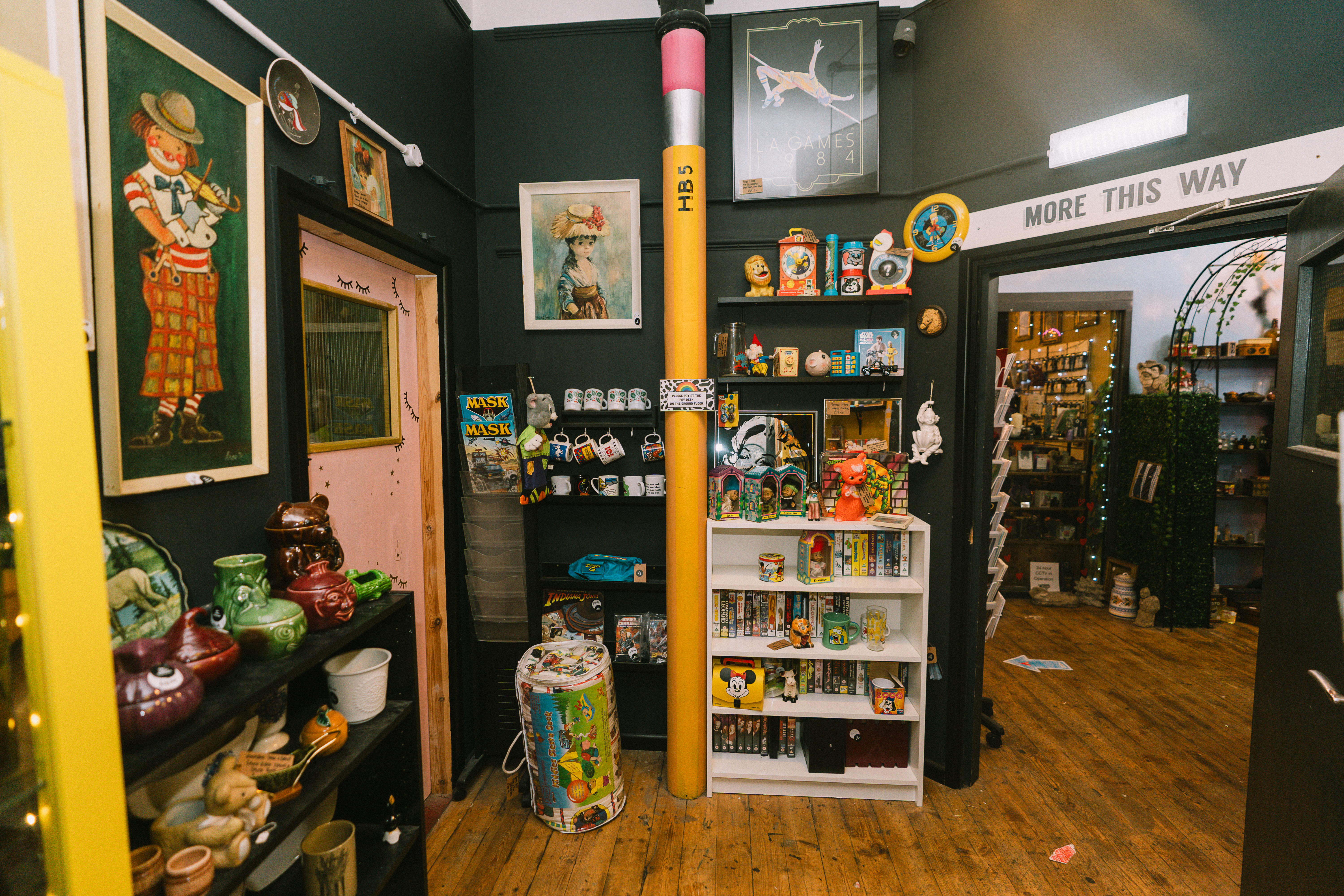
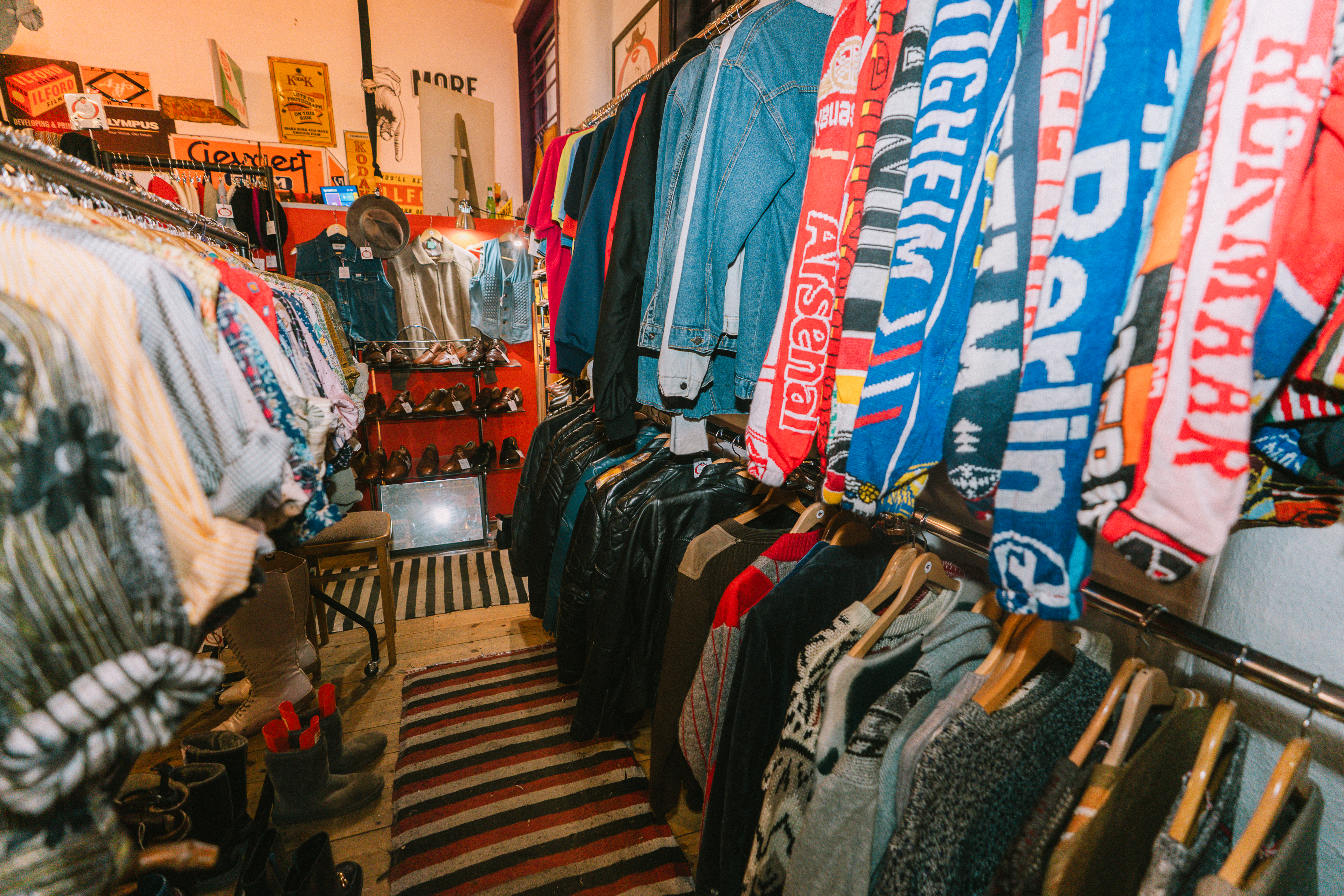
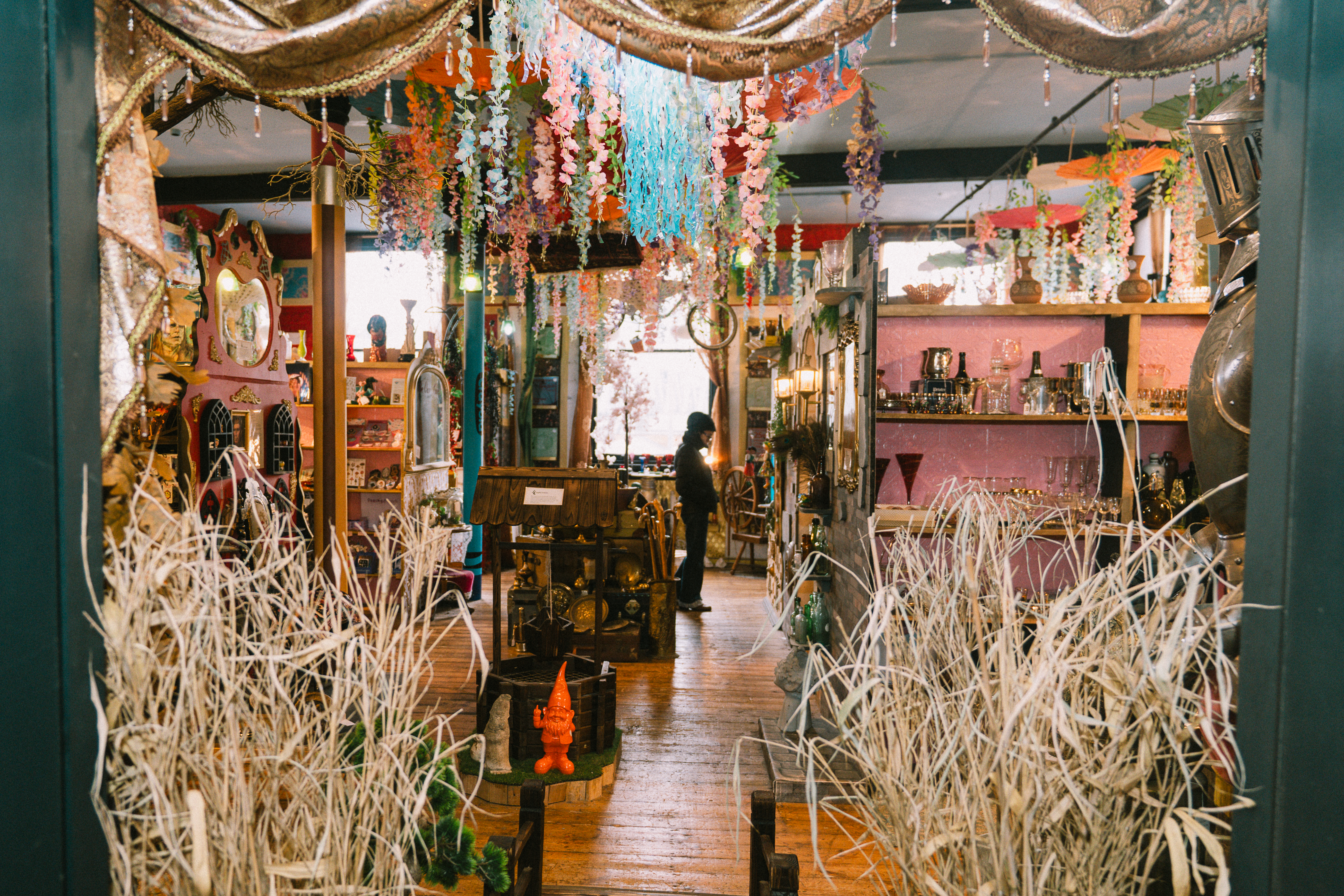
Hidden gem Hopkinson could be described as what happens when a Victorian hardware store has a wildly creative midlife crisis - and we mean that in the best way.
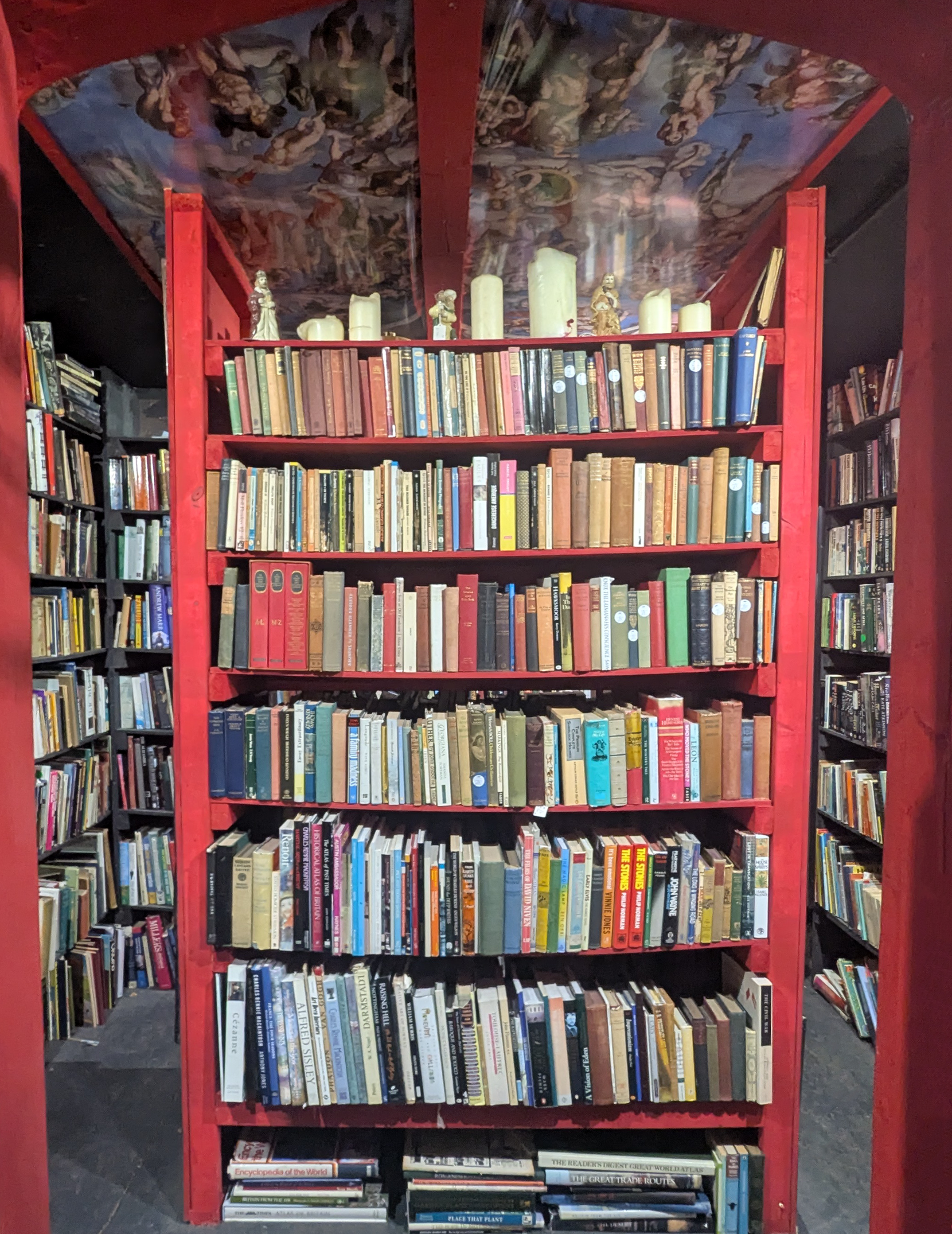
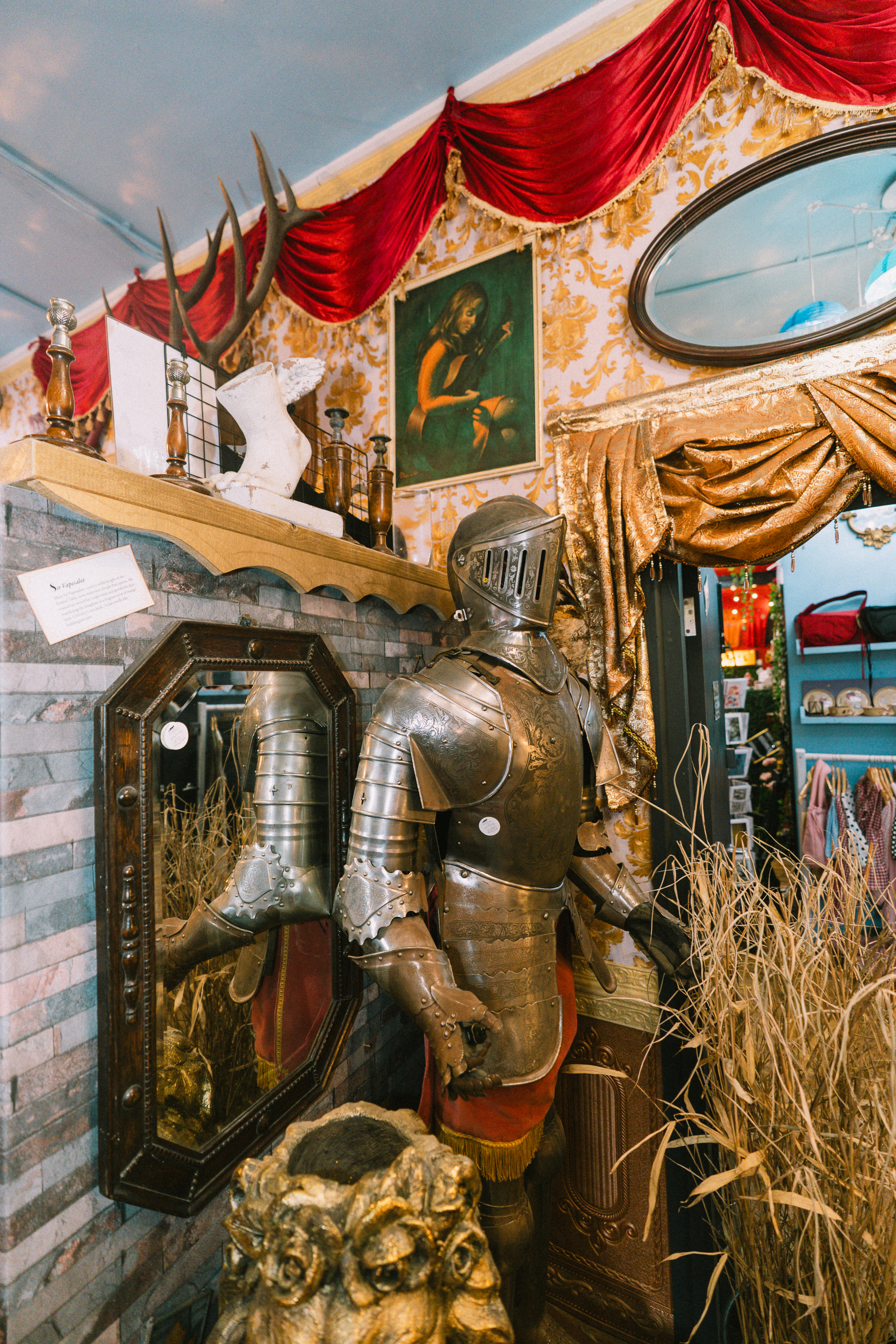
Part-shop, part-café bar, part-museum (and occasionally part-maze), this four storey antiques and art centre is packed with independent artists, vintage trinkets, handmade oddities, and curiosities you definitely didn’t plan on buying but absolutely will. Co-owner, Bryony Woodgates, talks about her tenure co-directing the space with Ash Hudson…

Tell us about the history of Hopkinson, and what it’s evolved from…
It’s a building from the 1800s, and it’s always been an industrial supplier. We have people come in who remember it as a hardware store – they talk about ladders from floor to ceiling, and how they would move around on rails. Previous owners, Liam and Becky, turned it into an antique centre about fifteen years ago; then I took over a few years ago.
I would really enjoy seeing somebody from the 1800s come in! You can see how it looked in some photographs, with horses and carriages outside, and guys in top hats and Victorian dress - I always wonder what they would think of it in its rainbow form today.
The shopfront sign – is that the original one?
Yeah, I believe so. We have a photograph of Harry Hopkinson in the basement as well.
How did it become such an interesting mix of creative, retail, museum, and café spaces?
It happened quite organically. I don't think anyone has ever walked into Hopkinson and been like, ‘this is a solid plan; this is what we’re gonna do’. When Ash and I took over, we had a job to get the communities back and have it thriving again. But there’s never been a sort of set idea of what we wanted it to be. We’ve just poured our hearts into it – it’s a reflection of what's important to us and what we feel passionate about.
I think people come back from time to time to be their odd, eccentric selves without that feeling of performativity or conformity
How do you choose which independent traders, artists, and makers become a part of Hopkinson? And is there a particular image you look for?
Ash has done such an incredible thing by getting independent artists trading their products on the first floor, so we have a community of artists who are wanting space here. We had a little bit of controversy previously with some of our dealers who were selling Temu items and things like that. So, we've had to put a ban on that to make sure that the items we stock are genuinely handmade, produced by the artist, and organically sourced.
We try not to repeat what our dealers are selling, to not saturate what we offer our customers, and to keep it as diverse as possible. I think as long as they meet that criteria, that’s sort of the threshold, and I think we follow demand as well. So, I guess we respond to our community, is what I’m trying to say.


Which part of Hopkinson do you find people are most receptive to, and why?
I think it’s the energy. We’re a group of people who have always felt a little bit like outsiders. We try to create a space for other people who share that feeling, and people really pick up on how genuine our intentions with the space are - and feel safe here.
All of our staff – myself, Ash, and the people who work with us – we’re part of the Queer community, and we’re neurodivergent, so we’re welcoming to people who haven’t felt welcome in the past. I think people come back from time to time to be their odd, eccentric selves without that feeling of performativity or conformity.
How do you think Nottingham has influenced the business and vice versa?
Nottingham is an eclectic mix of people. I think we are such a good example of how people can come together from all walks of life. We often have a bar full of football fans and people drinking tea. Then we have goths walking in, or students, or very alternative people. We all coexist under one roof, quite harmoniously – there’s never any trouble between football fans and the more alternative or Queer crowd. I think that's a really beautiful example of how people who wouldn't necessarily mingle day-to-day can just quite happily come together here.
And how do I think we have influenced Nottingham? It’s a really lovely thought to think that we have. We are known for our creativity, artists, and everything I mentioned. It’s nice to know that people have somewhere like that to go.
The thing about the building is that there are so many nooks and crannies... Part of its evolution is that it’s never finished
Do you have a specific example in mind of when you realised that it was making a difference?
Yeah – I’ve got loads of little moments. This place has been challenging to keep alive at times – when we took over it was really struggling. It’s been a labour of love and dedication to get it thriving, especially in the financial climate we find ourselves in. There have been many a day where at least one of us is thinking ‘Can we do this? Can we get through it?’
But there are moments – it’s usually people coming in and being like ‘Oh my God I’ve never been in a place like this’, or people saying a member of staff was really kind to them, and made a difference when they were having a really rough day. It’s those things that push us through when we’re up against it.
I remember a guy who came in, and his card wouldn’t work – he looked really upset. I said, “You know what - have a drink on me. It’s fine.” He came back a few weeks later and said that he was on the brink, and that his friend was meeting up with him to pull him out of a really dark place. But just being smiley and kind made a difference to his day.

How do you keep the space evolving while still preserving character and history?
Part of its character is that we’ve just layered and layered it to get where it is now. I don’t think you could do this with a new-build building – it wouldn’t have the same atmosphere and charm.
We’ve still got loads of photographs, and a catalogue of the old hardware and its price in shillings. We inherit a lot of cracks as well – it’s such an old building that’s been patched up and fixed for such a long time.
The retail side has got to a really good point, and we are going to refurbish the yard for the summer. We’re going to have a bar, and get some nice festival vibes outside. We want to work on our community again, and start hosting workshops and events, and we’re going to expand the artists space quite a lot too.
The thing about the building is that there are so many nooks and crannies, when you feel like you’ve completed something or filled the space, you turn around and there’s another project or business that can make its home here, or something else we can change. Part of its evolution is that it’s never finished – it’s never a completed thing.
You’ve got such a range of objects in the building. What’s the strangest item you’ve seen pass through Hopkinson?
There are just so many. It depends on what your definition is, doesn't it? Because you can go really dark, and think some of the historical stuff is strange. Or you could be like, ‘well, that five-foot ice cream is a bit strange’. We’ve had a lot of medieval jewellery here… But you never know what people are going to bring in.
Do you have a particular favourite room, space or trader in Hopkinson - which you think everyone should check out?
It’s hard because it’s all so different. I think what Ash has done with the artists on the first floor is really special. He’s executed it so well – it’s such a whimsical place. I think the bar is a really nice environment to be in too – it changes a lot throughout the day. It’s a nice place to work, but on Friday and Saturday evenings there’s a really nice vibe – when you sit outside in the sunshine it just feels so good.
Visit Hopkinson at 21 Station Street.
We have a favour to ask
LeftLion is Nottingham’s meeting point for information about what’s going on in our city, from the established organisations to the grassroots. We want to keep what we do free to all to access, but increasingly we are relying on revenue from our readers to continue. Can you spare a few quid each month to support us?


